There are no items in your cart
Add More
Add More
| Item Details | Price | ||
|---|---|---|---|

June, 2026
Author:Team Btribe
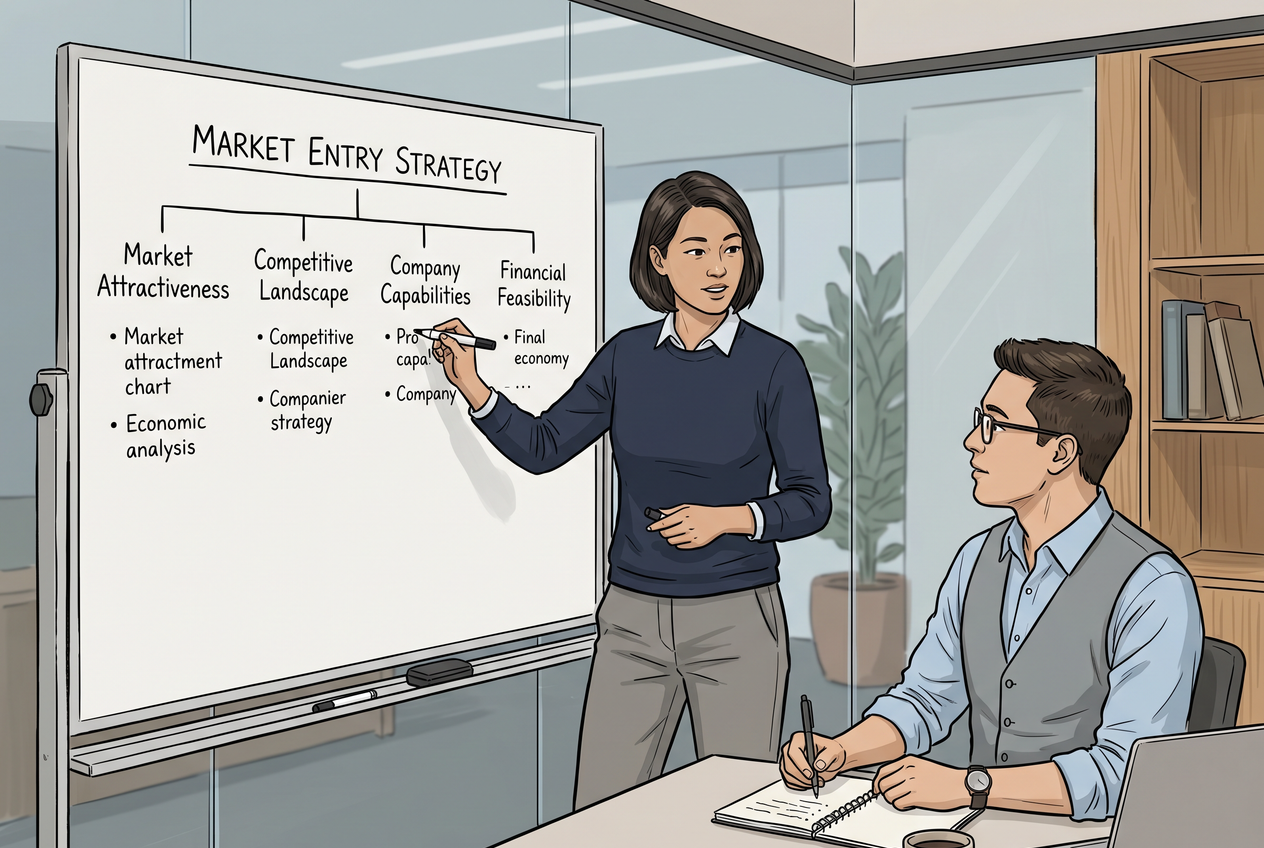
An interviewer asks you to estimate the annual demand for drone-based medical deliveries across rural India. You immediately start searching for a familiar framework but realize none of the casebooks you studied cover this scenario. Situations like these have become increasingly common as consulting firms move away from predictable interview formats.
Many MBA students spend months preparing for MBA consulting placement interviews by memorizing profitability trees, market entry frameworks, and standard case structures. While these resources remain useful, they are no longer enough to handle the ambiguity that candidates face during modern consulting interviews.
According to the GMAC Corporate Recruiters Survey 2025, problem-solving is the most important skill consulting recruiters look for in MBA graduates. Consulting firms increasingly value structured thinking, adaptability, and communication skills over memorized answers. Success in MBA consulting placement processes now depends on your ability to think independently under pressure and build frameworks from first principles.

Rohan entered business school with a clear goal of securing an MBA consulting placement at a top firm. During his first semester, he completed multiple casebooks and spent hours highlighting frameworks. He believed more reading would automatically translate into stronger interview performance.
When placement season arrived, he struggled during live interviews. The cases were not identical to what he had practiced. Interviewers challenged his assumptions, introduced unexpected twists, and pushed him to justify every recommendation. Despite strong theoretical knowledge, he found it difficult to adapt in real time.
The problem was not a lack of effort. The issue was that consulting interviews reward application rather than memorization. Many candidates preparing for MBA consulting placement opportunities discover that passive learning creates familiarity but not true problem-solving ability.
Adaptive preparation focuses on building flexible thinking rather than relying on fixed frameworks. Instead of asking which framework fits a problem, candidates learn how to create a structure based on the unique requirements of the situation.
This approach has become particularly important because interviewers increasingly test creativity and logical reasoning. Modern MBA consulting placement interviews often include unconventional market sizing questions, ambiguous business problems, and open-ended discussions that require candidates to think aloud. Similar to MBA product management placement interviews, candidates are expected to demonstrate structured problem-solving, analytical thinking, and the ability to navigate ambiguity with confidence.
Students who practice adapting to new situations become more comfortable handling uncertainty. They learn how to communicate clearly, even when they do not immediately know the answer. That confidence often becomes a major differentiator during MBA consulting placement interviews.
Traditional cases usually followed predictable patterns. Candidates could often identify the case type within the first few minutes and apply a familiar framework.
Today's consulting interviews look different. Interviewers intentionally introduce ambiguity to assess how candidates think when information is incomplete. They want to understand whether you can break down a complex problem into manageable components. Common ways interviewers test candidates include:
These changes explain why MBA consulting placement preparation now requires more than simply reading casebooks.
Success comes from building a preparation system that develops analytical thinking, communication skills, and adaptability simultaneously.
A structured framework ensures that your preparation remains consistent and measurable. Instead of randomly solving cases, you focus on activities that directly improve consulting interview performance. Effective MBA placement preparation requires a systematic approach that builds both problem-solving ability and interview confidence over time.
The following five-step approach has helped many students strengthen their MBA consulting placement readiness while developing skills that remain valuable throughout their careers.
Start by solving one unconventional guesstimate every day. Focus on breaking the problem into logical drivers rather than finding a perfect answer. The objective is to improve structured thinking.
For example, estimate the annual market size for electric scooters in a specific city. Divide the problem into population, income levels, adoption rates, and replacement cycles. This exercise strengthens the reasoning skills required for MBA consulting placement interviews.
Consistency matters more than complexity. Twenty minutes of daily practice often produces better results than occasional marathon sessions.
Many students avoid live mocks because they feel uncomfortable exposing weaknesses. Ironically, that discomfort is exactly what makes mock interviews valuable.
Schedule at least two mock interviews every week. Record the sessions and review them carefully. Pay attention to your communication style, framework development, and ability to handle follow-up questions. Candidates pursuing MBA consulting placement roles frequently discover blind spots during live discussions that never appear during solo practice.
Choose one consulting case every week and rebuild the framework without looking at the official solution. This exercise trains your brain to create structures independently.
Rather than asking which framework applies, focus on understanding the business objective. From there, identify the drivers that influence outcomes and organize them logically.
This habit significantly improves flexibility during MBA consulting placement interviews because it encourages original thinking instead of pattern recognition. In fact, many candidate testimonials highlight framework-building from first principles as one of the most valuable skills they developed during consulting interview preparation.
Live projects provide evidence of practical problem-solving ability. They allow students to apply classroom concepts to real business challenges while generating measurable results. Consulting recruiters often value project experience because it demonstrates initiative, teamwork, and analytical thinking. Participation in live projects also creates strong stories for interviews.
Many students who secure MBA consulting placement opportunities leverage project experiences to demonstrate leadership, stakeholder management, and structured problem-solving.
Your resume creates the first impression long before interviews begin. Every bullet point should communicate impact, ownership, and measurable outcomes.
Avoid generic descriptions of responsibilities. Instead, focus on achievements supported by numbers. Recruiters should immediately understand the value you created.
Candidates targeting MBA consulting placement roles benefit from regularly reviewing their resumes with mentors who understand consulting recruitment expectations.
| Week | Guesstimate Practice | Mock Interviews | Framework Rebuilds | Project Hours |
|---|---|---|---|---|
| 1-2 | 5 per week | 2 per week | 1 per week | 5 hours |
| 3-4 | 5 per week | 3 per week | 2 per week | 8 hours |
| 5-8 | 6 per week | 3 per week | 2 per week | 10 hours |
Mock interviews reveal weaknesses that reading alone cannot uncover. They expose communication gaps, unclear thinking, and moments where candidates struggle under pressure.
Many students abandon mocks after a few sessions because receiving direct feedback feels uncomfortable. However, the candidates who embrace feedback usually improve much faster than those who avoid it.
Live practice creates familiarity with the pressure of real interviews. As a result, MBA consulting placement candidates become more confident, structured, and composed during actual recruitment processes. Repeated exposure to challenging questions also improves adaptability. Over time, candidates learn how to recover from mistakes without losing momentum.
Btribe was designed to address the exact challenges that MBA students face while preparing for consulting recruitment. Instead of focusing solely on theory, the platform emphasizes practical application and continuous improvement.
Students gain access to structured mock interviews, expert feedback, industry insights, and opportunities to participate in projects that strengthen consulting profiles. These experiences help bridge the gap between classroom learning and real interview expectations.
For candidates pursuing MBA consulting placement opportunities, Btribe provides a systematic approach that combines skill development, mentorship, and accountability. The goal is not merely to help students clear interviews but to develop capabilities that remain valuable throughout their consulting careers.
Whether you are targeting internships or final placements, a consistent preparation system can significantly improve your MBA consulting placement outcomes. The earlier you begin, the more time you have to refine your communication, analytical thinking, and problem-solving abilities.
Explore all our courses here!
Ideally, preparation should begin during the first semester. Early preparation allows you to build skills gradually rather than rushing during placement season. Students who start early often perform better in MBA consulting placement interviews because they have more time to practice and improve.
Live projects provide practical experience solving business problems. They create strong resume points and interview stories while demonstrating initiative and analytical thinking. These experiences often strengthen MBA consulting placement applications.
A one-page resume with quantified achievements typically works best. Focus on measurable outcomes, leadership experiences, and structured problem-solving examples. Consulting recruiters prefer concise and impact-driven resumes.
Case competitions can strengthen your profile by showcasing teamwork, analytical thinking, and presentation skills. While they are not mandatory, they often add credibility to MBA consulting placement applications and provide valuable interview examples.
The most effective approach combines daily practice, live mock interviews, framework rebuilding, and continuous feedback. This combination develops adaptability and structured thinking, which are essential for success in modern consulting interviews.