There are no items in your cart
Add More
Add More
| Item Details | Price | ||
|---|---|---|---|

June, 2026
Author:Team Btribe

Placement season often arrives faster than expected.
At the start of an MBA program, most students plan to begin preparing well in advance. However, assignments, internships, competitions, club responsibilities, and academics quickly fill up the calendar. Before they realize it, placements are only a few weeks away, and preparation still feels incomplete.
The good news is that a late start does not automatically mean poor outcomes. What matters most is how you use the time you have left. Many students spend their final month trying to cover everything, only to end up overwhelmed and unfocused.
The smarter approach is to focus on the activities that directly impact shortlists and interviews. A structured MBA placement preparation strategy can help you prioritize the right tasks, strengthen your profile, and make the most of the next 30 days before placements begin.
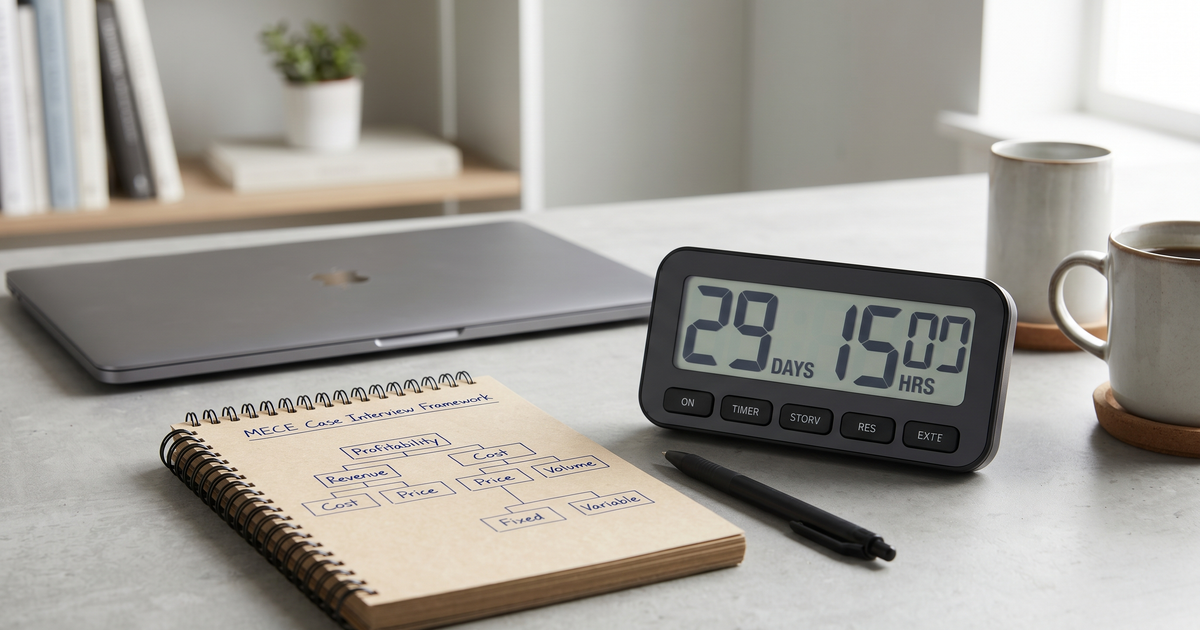
When placements approach, panic often replaces strategy. Students suddenly feel the need to catch up on everything they may have missed throughout the year. After spending months focusing on academics, internships, competitions, and even MBA admission goals earlier in their journey, many realize they have not prepared specifically for placement interviews.
As a result, they spend hours consuming information without creating outcomes. They watch interview videos, read placement guides, and attend multiple sessions without actually improving the skills recruiters assess. While these activities feel productive, they rarely create a measurable difference during interviews.
The final month should not be about gathering more knowledge. It should be about executing a practical MBA placement preparation strategy that improves your resume, strengthens your stories, builds interview confidence, and gives recruiters evidence of your capabilities.
Before building your MBA placement preparation strategy, it helps to understand what recruiters genuinely care about. Most companies evaluate a combination of the following factors:
Many students assume recruiters are searching for perfect candidates. In reality, recruiters are looking for candidates who can demonstrate potential, learn quickly, and communicate effectively. Understanding this shifts your focus from endless preparation to targeted preparation.
When you only have 30 days left, every activity must earn its place on your calendar.
The goal is not to become an expert in everything. The goal is to improve the few areas that significantly influence placement outcomes. Many students make faster progress when they follow structured placement-focused courses, such as The A Game course combos, instead of trying to piece together resources from multiple sources.
The following MBA placement preparation strategy focuses on the activities that directly impact shortlists, interviews, and final offers. Instead of doing more, the focus should be on doing the right things consistently over the next four weeks.
Your resume is usually the first interaction recruiters have with your profile. If it fails to create interest, you may never reach the interview stage.
Start by reviewing every bullet point on your resume. Remove vague descriptions and replace them with measurable achievements. Focus on impact, ownership, and outcomes. A strong MBA resume-building process can significantly improve shortlist chances because recruiters spend only a few seconds reviewing each application.
Practical experience creates stronger conversations than theoretical knowledge. This is why live projects for MBA students can become valuable assets during placement season. A well-executed project gives you real examples, measurable outcomes, and meaningful challenges to discuss during interviews.
Students targeting product roles can consider a product management live project focused on user research, feature prioritization, or market analysis. Similarly, students interested in marketing can benefit from a marketing live project involving campaign planning, consumer insights, or performance measurement.
Many candidates have good experiences but struggle to explain them effectively. Instead of memorizing interview answers, create structured stories around internships, competitions, leadership positions, projects, and academic initiatives. Focus on situations where you solved problems, took ownership, or influenced outcomes.
Recruiters often ask similar behavioural questions across industries. Having well-prepared stories makes it easier to answer consistently and confidently. Reading placement testimonials from successful candidates can also help you understand how strong interview stories are structured and what recruiters tend to find memorable during final interviews.
Structured thinking is valuable across consulting, product, marketing, operations, and general management roles. You do not need to solve hundreds of cases during the final month. However, you should become comfortable with breaking down problems logically and presenting recommendations clearly.
Students forming an MBA placement preparation strategy often benefit from practicing common frameworks regularly. The objective is not memorization. The objective is to develop a habit of structured thinking.
One of the biggest mistakes students make is postponing mock interviews until the final week. Interview skills improve through practice, not reading. Every mock interview reveals communication gaps, filler words, weak stories, and confidence issues that are difficult to identify on your own.
A practical MBA placement preparation strategy prioritizes mock interviews because they simulate actual interview conditions and help students become comfortable under pressure.
The final month should follow a clear structure. Instead of deciding what to do each day, allocate every week to a specific objective.
The plan below provides a simple roadmap that balances preparation, execution, and revision.
The first week should focus on your resume and target companies. Update your resume, refine achievement statements, research job descriptions, and identify common recruiter expectations.
Create a list of companies you are interested in and understand their hiring requirements for MBA summer placements. This week lays the foundation for the rest of your MBA placement preparation.
The second week of your MBA placement preparation strategy should focus on building proof of capability. Work on relevant live projects for MBA students and begin practicing case frameworks regularly. The objective is to create experiences and examples that strengthen your interview conversations.
Students interested in consulting, product management, or marketing roles can use this week to build role-specific exposure. This stage becomes particularly valuable for candidates pursuing MBA product management placement or MBA marketing placement preparation opportunities.
Week three should revolve around interview practice. Schedule multiple mock interviews with alumni, mentors, peers, or industry professionals. Record sessions wherever possible and review them honestly.
Focus on improving communication, confidence, body language, and storytelling. This phase often delivers some of the biggest improvements in MBA placement prep because students finally identify weaknesses that theory cannot reveal. Many students also use an MBA placement playbook during this stage to track recurring feedback, refine answers, and create a structured improvement plan before final interviews.
The final week of your MBA placement preparation strategy is about refinement rather than learning new concepts. Review your stories, revise key frameworks, revisit company research, and continue practicing interview responses. Avoid overwhelming yourself with new material.
Confidence usually comes from preparation and repetition. The final week should help you consolidate everything you have worked on during the month. Students focused on MBA final preparation often see the best results when they spend this week polishing rather than experimenting.
At Btribe, we understand that many students begin a serious MBA placement preparation strategy later than they planned. That is why our approach focuses on execution rather than information overload.
We help students build practical placement skills through structured frameworks, interview preparation resources, project-based learning opportunities, and industry-relevant guidance. Instead of asking students to consume endless content, we focus on helping them develop outcomes that recruiters actually evaluate.
Whether your goal is consulting, marketing, product management, HR, or general management, our programs are designed to support focused MBA placement preparation without unnecessary complexity.
For students preparing under tight timelines, clarity often matters more than volume for your MBA placement preparation strategy. Our objective is to help you spend your remaining preparation time on the activities that create the biggest impact.
Explore all our courses here!
Yes. While starting earlier is always preferable, 30 days can still be enough to create meaningful improvement for your MBA placement preparation strategy. Focus on resume optimization, interview practice, company research, and relevant projects instead of trying to cover everything.
It is extremely important because your resume often determines whether you receive an interview opportunity. A clear, achievement-focused resume significantly improves shortlist chances.
Yes. Projects provide real experiences, measurable outcomes, and practical examples that strengthen interview responses. They also demonstrate initiative and execution ability.
Most students benefit from completing at least 8-15 quality mock interviews. The exact number depends on your current confidence and communication skills.
Students looking at how to get a PPO in MBA programs should focus on ownership, proactive communication, strong project delivery, and relationship building during internships. Consistent performance usually matters more than dramatic gestures.
A structured MBA summer placement course can be useful if it provides focused guidance, mock interviews, resume support, and practical frameworks. The key is choosing execution-oriented programs rather than purely theoretical ones.
During the final MBA placement preparation strategy, students should prioritize interview readiness, company research, resume refinement, networking, and confidence-building activities. Avoid trying to learn entirely new concepts during the final days before interviews.
Follow a focused MBA placement preparation strategy, spend your time on activities recruiters actually evaluate, and concentrate on execution rather than information gathering. Thirty days may not be enough to do everything, but it is certainly enough to make meaningful progress.